

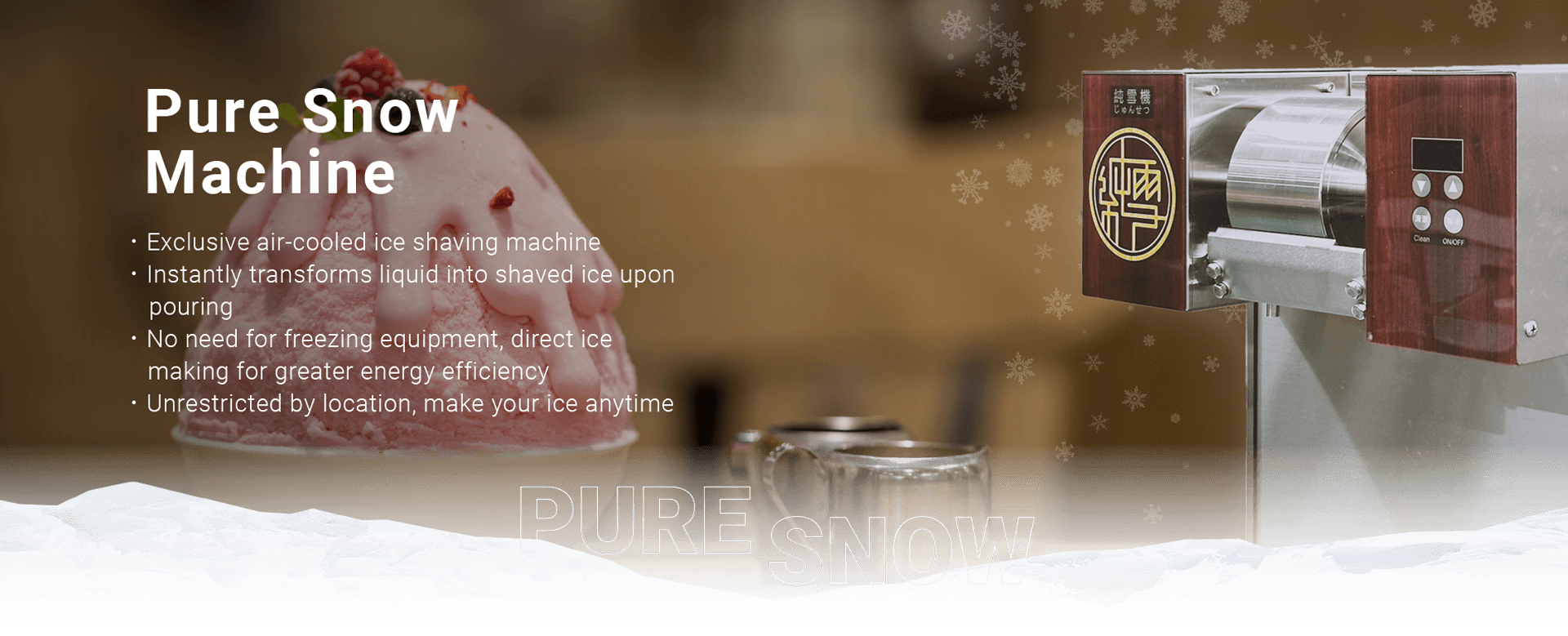
Commercial Snow Ice Machine Not Freezing? Troubleshooting & Repair Guide
Commercial Snow Ice Machine Not Freezing?
Professional Maintenance & Troubleshooting Guide: Causes, Diagnostic Steps, and Care Tips
What to Do When Your Snow Ice Machine Suddenly Stops Freezing?
During peak business hours at dessert shops or cafes, if a commercial snow ice machine suddenly fails to produce ice or freezes too slowly, it can directly impact operations and customer experience. There are several reasons why a snow ice machine might stop freezing, ranging from common issues like refrigerant leaks and poor condenser heat dissipation to control board failure or insufficient power supply voltage.
This article will guide you step-by-step through identifying the root causes, helping you perform preliminary self-diagnostics and find quick, effective solutions!
4 Common Core Causes of Snow Ice Machines Not Freezing
🧊 1. Refrigerant Leak (Insufficient Coolant)
Refrigerant is the core medium that absorbs heat and achieves rapid freezing. If copper joints, evaporators, or welding points develop micro-cracks due to long-term vibration, refrigerant will leak, preventing the system from reaching -40°C and resulting in blowing only ambient air or a completely warm drum.
⚡ 2. Control Board Inactivation & Low Voltage
If the local power supply voltage is unstable (dropping below standard 110V or 220V thresholds), the compressor may fail to start due to safety protection mechanisms. Additionally, overloaded control boards, damaged relays, or signal glitches can prevent the system from executing start commands.
🌬️ 3. Condenser Dust Buildup (Poor Heat Dissipation)
Air-cooled snow ice machines rely on condensers to dissipate heat. If condenser fins become clogged with heavy dust, grease, or lint, cooling efficiency drops sharply, triggering high-pressure safety cutoffs that stop the compressor or prevent cooling.
🛠️ 4. Expansion Valve Clogging or Compressor Failure
Capillary tubes or expansion valves blocked by ice or debris will interrupt refrigerant circulation. Furthermore, internal valve aging or motor burnout within the compressor will result in zero pressure output.
4 Steps to Diagnose and Troubleshoot Ice Machine Freezing Issues
When you notice your equipment is not freezing, please check the following steps:
- Step 1: Check Power Supply and Input Voltage
Use a multimeter to measure outlet voltage, ensuring it matches machine specifications (110V or 220V). If voltage drops due to sharing circuits with high-power appliances (like ovens or coffee makers), provide a dedicated independent circuit. - Step 2: Clean and Clear Condenser Cooling Fins
Regularly inspect the condenser located at the back or side of the unit. Use a soft brush or compressed air gun to thoroughly clean dust from the fins, keeping at least 15–20 cm of clearance around the machine. - Step 3: Observe Compressor and Control Board Status
Listen for humming noises from the compressor and the sound of the cooling fan upon startup. If error codes appear on the display or the compressor remains totally inactive, the control board relay or starting capacitor may be faulty. - Step 4: Test Refrigerant Pressure and Locate Leaks
If the compressor runs normally but the evaporator drum shows no frost at all, a professional technician must connect pressure gauges to check refrigerant levels. If pressure is too low, nitrogen pressure testing must be performed to locate and repair leaks, followed by vacuuming and recharging to exact specifications.
👉 Related Reading: Learn how to extend equipment lifespan through routine maintenance in 《What Features Should a Good Shaved Ice Machine Have?》.
PureSnow: Ultimate Stability & Comprehensive After-Sales Support
To solve traditional issues of fluid leaks, poor heat dissipation, and tedious maintenance, PureSnow Commercial Snow Ice Machines incorporate dual Taiwanese-Japanese patented cooling technologies, paired with high-durability stainless steel pipelines and inverter energy-saving protection mechanisms:
- 🛡️ Patented Anti-Leak Refrigeration Piping: Minimizes welding stress fracture risks and drastically reduces refrigerant leakage rates.
- ⚡ Wide-Voltage Protection & Smart Control Board: Built-in voltage overload protection and auto-diagnosis systems ensure stable operation.
- 🌀 High-Efficiency Air-Cooling Circulation: Easy-to-remove filter meshes make condenser cleaning simple and effortless.
- 🛠️ Comprehensive Global & Local Support: Professional technical guidance and original spare parts supply ensure worry-free operations for your dessert business.
FAQ ── Snow Ice Machine Troubleshooting & Repairs
The machine runs and makes noise, but the drum is completely warm. What's wrong?
This is typically caused by exhausted refrigerant (coolant) or damaged compressor valves failing to build pressure. We recommend shutting down the unit immediately and contacting a technician for pressure testing and leak repair.
Why does the snow ice machine automatically shut down after running for a while?
A common cause is dirty condenser fins leading to poor heat dissipation, which triggers high-pressure safety protections. Clean the condenser mesh first and ensure adequate ventilation clearance around the unit.
Can leaked refrigerant be refilled directly?
Direct refilling is not recommended. If leaks are not found and repaired first, the newly added refrigerant will quickly escape again. The correct procedure is: Pressure testing & leak repair ➔ Vacuum evacuation ➔ Recharging exact factory-specified refrigerant amounts.
How does unstable voltage affect a snow ice machine?
Low voltage causes excessive starting current surges, leading to thermal trips and eventual burnout of the compressor motor or control circuits over time. We recommend equipping the unit with a dedicated independent circuit or voltage stabilizer.
Need Equipment Maintenance Consultation or Want to Upgrade Your Snow Ice Machine?
PureSnow's professional technical team is ready to provide equipment inspection advice and the latest model inquiries, keeping your dessert business running smoothly and profitably!
Contact PureSnow Technical Team